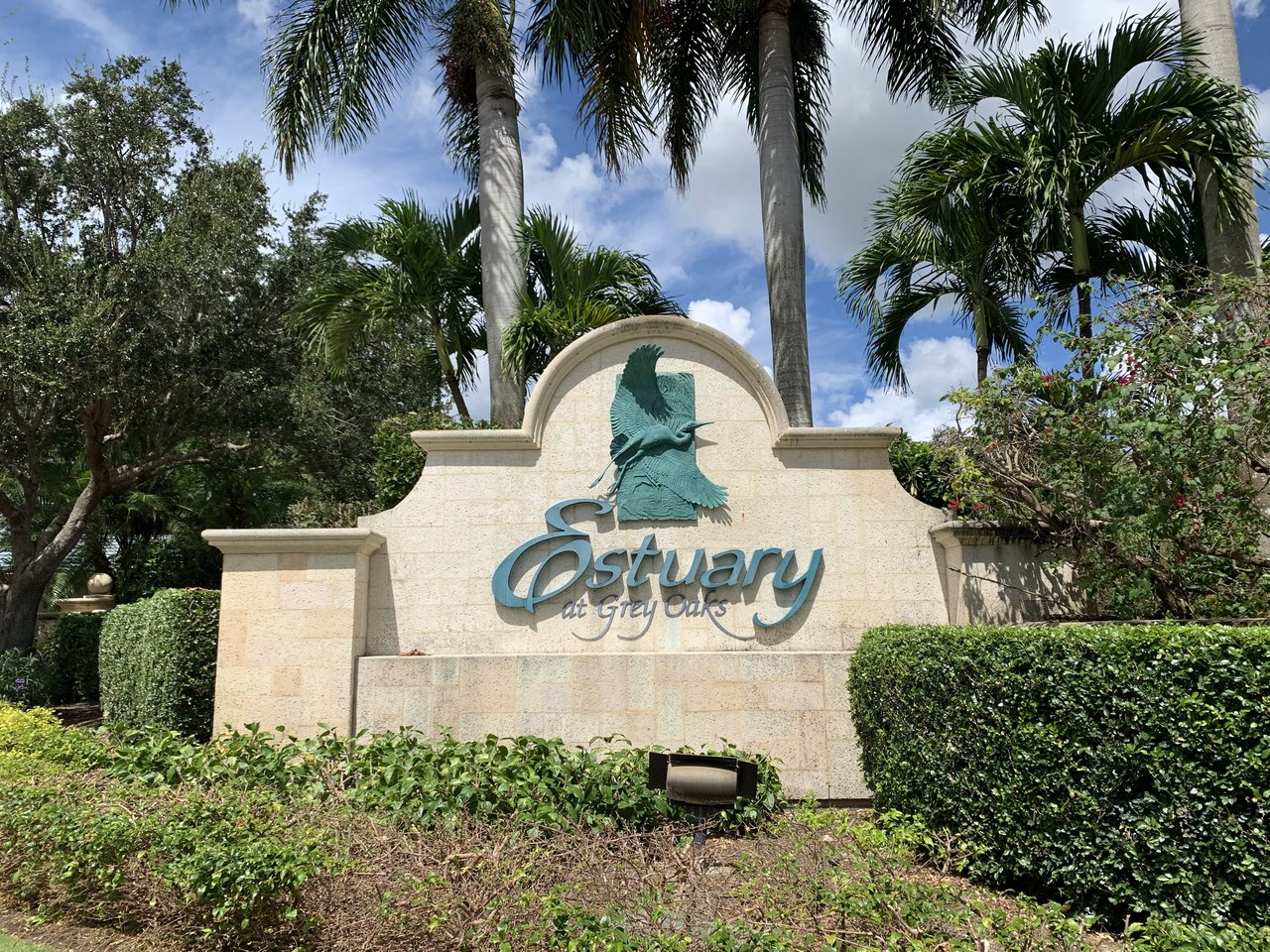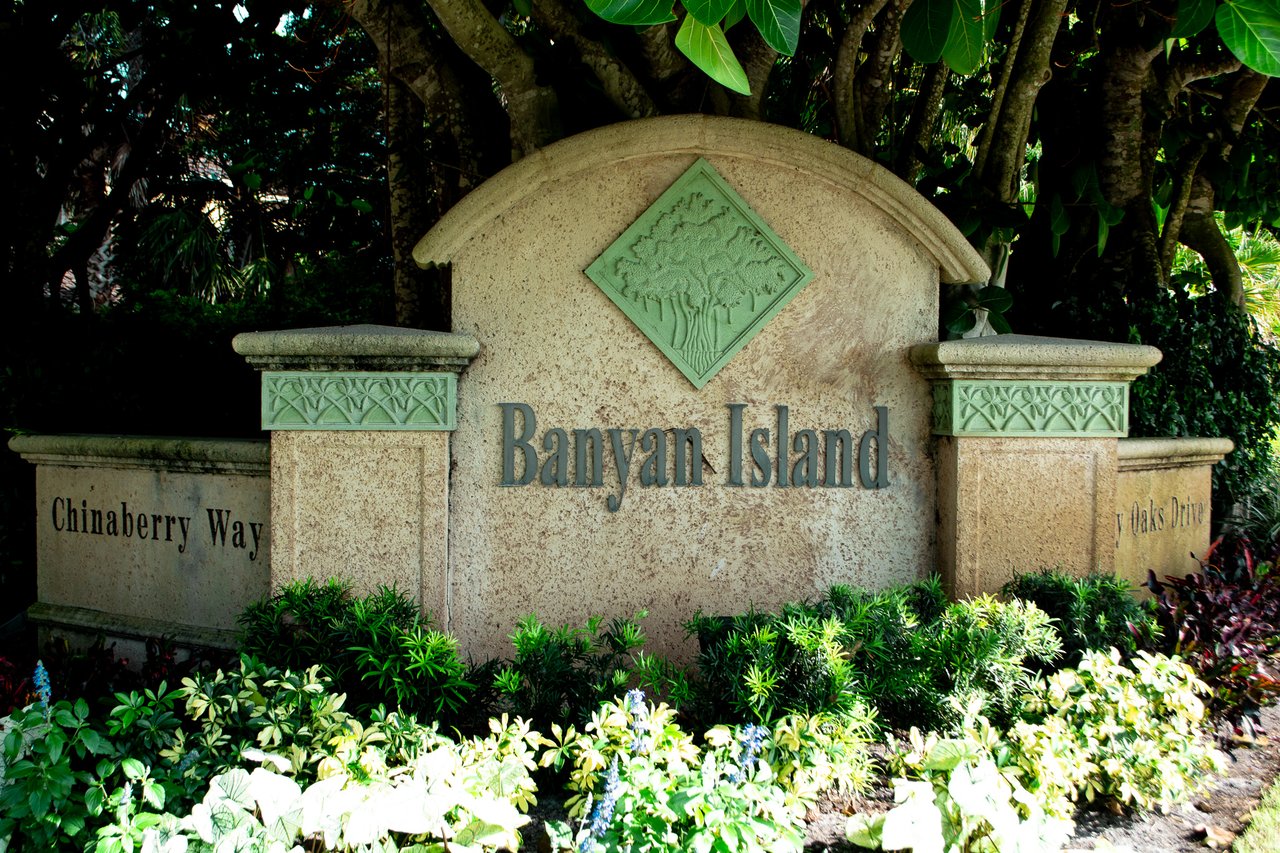
Walk Chinaberry Way at first light this week and you will hear it before you see it: a low croak from a heron working the shoreline, then a splash, then wingbeats overhead that do not belong to anything nesting in Grey Oaks. September is when Southwest Florida's fall bird migration reaches its heaviest push, and the twenty-six homesites that make up Banyan Island sit closer to that migration than most residents realize. This is not a story about driving somewhere to see birds. It is a story about what is already flying over the water in your own backyard.
A Neighborhood Built Almost Entirely on Water
Banyan Island is unusual even by Grey Oaks standards. Of its twenty-six lots, all but four sit directly on the lake that wraps around the enclave, with golf course views layered in behind the water on most of them. That is not a decorative detail. A neighborhood where nearly nine in ten homesites touch open water creates a continuous ribbon of shoreline, shallow edges, and grassy banks, exactly the kind of habitat wading birds look for when they need to rest and feed between longer flights. Most Naples subdivisions have a lake or two. Banyan Island is close to being one long lake with houses arranged around it.
That geometry is why residents who have lived there for years already take herons, egrets, and the occasional turtle sunning on the bank for granted. Those sightings are common across Grey Oaks generally, where freshwater lakes thread through the golf courses and residents regularly report herons and egrets working the fairway ponds. What is different this month is not the presence of birds. It is which birds, and why they are only passing through rather than living there year-round.
The Locals and the Passers-Through
There is a real difference between the wading birds that call Grey Oaks home twelve months a year and the migrants moving through right now, and it comes down to purpose. A resident great blue heron on your lake in July is there because the fishing is good and it always has been. A bird on that same lake in late September might be four hundred miles from where it bred and another six hundred from where it plans to spend the winter, using your lake the same way a driver uses a rest stop: brief, functional, gone by the next morning.
Regional data backs this up. More than 450 North American bird species migrate south each fall, retreating from the cold and the food shortages that come with it, and Southwest Florida sits directly in that path. Some species start moving as early as July. By late August and into September the pace picks up considerably, which means the bird working your shoreline this week could easily be a transient rather than a local, even if it looks, at a glance, like the same heron you have been half-ignoring since spring.
Why the Migration Doesn't Funnel Into One Place
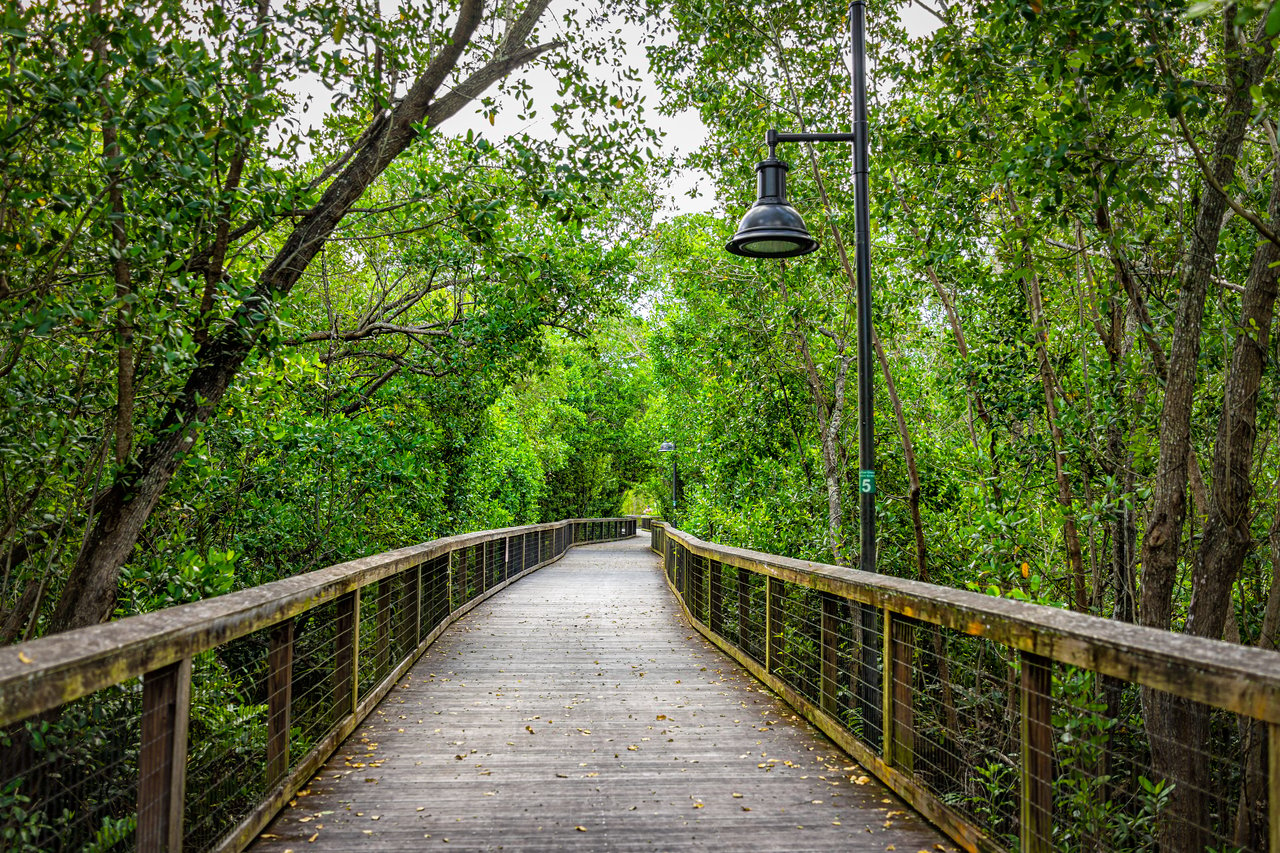
The obvious assumption is that if you want to see real migration activity, you drive to Corkscrew Swamp Sanctuary, about thirty minutes northeast of Naples, where Audubon has staffed a 2.25-mile boardwalk through pine flatwoods, wet prairie, marsh, and old-growth bald cypress since 1954. That instinct is not wrong. Corkscrew is genuinely one of the more heavily documented birding sites in the country. According to eBird, the global database birders use to log sightings, the sanctuary ranks 17th nationally and third in Florida for the sheer number of checklists submitted, and its own records show more than 260 species recorded over the years.
But the sanctuary's own director has made a point that matters for anyone with a lake in their backyard rather than a boardwalk pass: spring migration is compressed and food-driven, with birds racing to arrive in time for nesting season, while fall migration stretches out because it is shaped more by weather than by biological urgency. Birds in autumn are not rushing toward a deadline. They drift with fronts, stop where conditions are convenient, and scatter across a much wider footprint than they do in spring. That is precisely why a well-monitored preserve like Corkscrew does not capture the whole picture. When migration is weather-driven rather than food-driven, birds are just as likely to put down on a quiet subdivision lake as they are to funnel into the one preserve everyone already knows to visit.
Last fall, volunteers at Corkscrew logged early arrivals including Yellow-billed Cuckoo, Ovenbird, and Louisiana Waterthrush in early August, well ahead of the traditional migration calendar most casual birders carry around in their heads. If birds are already moving that early and that broadly, there is no reason to assume the lake behind your own lot is exempt from the same traffic.
There is also a timing coincidence worth knowing about if you do want to make the drive. Corkscrew's Blair Visitor Center and boardwalk closed for routine annual maintenance from August 17 through 30 this year, and the sanctuary's rebuilt Spurlino Foundation Discovery Center reopened back in June after its own construction closure. Both are back open now, which means the professional side of this migration story, staffed by naturalists who can tell a Prairie Warbler from a Yellow-throated one at a glance, is running at full capacity at the same moment the birds themselves are arriving in the largest numbers.
What to Watch For This Month
You do not need a boardwalk pass to start noticing the difference between your regular lake residents and this season's visitors. A few specific things to watch for on an early morning walk around Banyan Island's shoreline:
- Wood storks and roseate spoonbills, two of the region's signature wading birds, moving in small groups along the shallows rather than the solitary pattern typical of a resident heron
- The same wave of migrant songbirds Corkscrew volunteers log every August, including Yellow-billed Cuckoo, Ovenbird, and Louisiana Waterthrush, working through the tree cover at the lake's edge in the early morning
- A general uptick in the number of wading birds working the shoreline at once, since fall's weather-driven movement scatters more birds across more stops than the tighter, faster spring push does
None of this requires special equipment beyond a decent pair of binoculars and a willingness to be outside before the golf carts start moving. The best viewing tends to happen in the first hour after sunrise, when the water is still and the wind hasn't picked up enough to keep birds from settling on open ground.
If you want to see the more concentrated version of what is passing through the region this month, Corkscrew Swamp Sanctuary is open daily and worth the drive precisely because its naturalists are tracking the same movement you can watch from your own dock, just with better documentation and a longer boardwalk. But the honest version of this story is that you already have a front-row seat. Banyan Island was built almost entirely around water, and this month, that water is doing exactly what water like it does everywhere else on the migration path. It's just doing it a great deal closer to home.
For more on what makes life inside Grey Oaks distinct, from its lakes and preserves to its architecture and club culture, the Grey Oaks Luxury Team is always available to talk through the details of this community, whether the question is about birds on the water or the homes that sit beside them. Contact Us.